Humer Retro Font: Bold Branding for Small Business
As a small business owner, I know that every visual touchpoint matters. From the logo on my website header to the sticker sealing a package, typography communicates personality before a customer ever reads a single word of copy. Finding a typeface that balances nostalgic charm with modern legibility is often a challenge, but Humer Retro offers a compelling solution for brands wanting to stand out. This display font captures the groovy spirit of the 60s and 70s without feeling like a costume. For entrepreneurs in creative industries, Humer Retro provides a practical way to inject warmth, playfulness, and distinct character into branding materials while maintaining professional consistency.
Defining the Visual Personality of Humer Retro
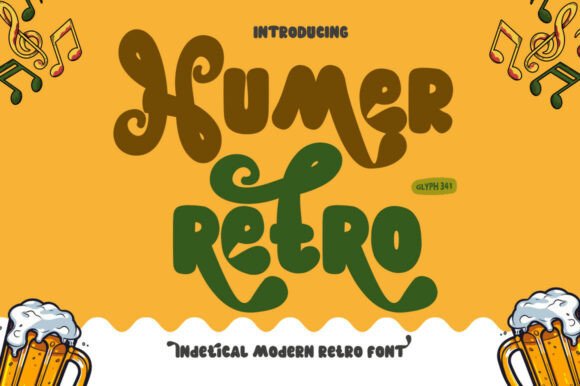
Humer Retro is not a subtle background player; it is a bold statement piece designed for high-impact moments. The letterforms are chunky and confident, featuring whimsical swashes that add movement and energy to static designs. Unlike some vintage-inspired fonts that suffer from poor spacing or outdated proportions, this typeface feels intentionally crafted for contemporary design workflows. The funky vibe is immediate, evoking feelings of nostalgia, authenticity, and approachability.
For a business owner, this emotional resonance is valuable. When customers see Humer Retro on a product label or social media graphic, they subconsciously associate the brand with creativity and human connection rather than corporate sterility. It works exceptionally well for businesses that want to appear established yet fun, such as artisanal bakeries, independent coffee roasters, vintage clothing boutiques, or lifestyle coaching services. The font’s inherent personality does the heavy lifting, allowing you to communicate your brand values visually without needing complex illustrations.
Practical Applications Across Business Touchpoints
The true test of any premium font is its versatility across real-world business assets. Humer Retro shines as a headline and display typeface, making it ideal for specific applications where grabbing attention is the primary goal. Here is how this creative font translates to everyday business needs:
- Product Packaging and Labels: The chunky weight of Humer Retro ensures readability even on curved surfaces like candle jars, beverage bottles, or cosmetic tubes. Its retro aesthetic pairs perfectly with textured papers and earthy color palettes common in handmade goods.
- Social Media Graphics: On platforms like Instagram and Pinterest, thumbnails need to be legible at small sizes. The bold structure of this typeface prevents text from disappearing against busy backgrounds, making quote cards, sale announcements, and new product teasers instantly recognizable in a feed.
- Signage and Menus: For cafés and retail spaces, Humer Retro creates an inviting atmosphere on chalkboards, window decals, and printed menus. The playful swashes can guide the eye toward daily specials or featured items without looking cluttered.
- Digital Banners and Ads: Website hero images and digital ad creatives benefit from the font’s strong silhouette. It anchors the composition and creates a clear hierarchy, ensuring the value proposition is seen first.
- Brand Collateral: Business cards, thank-you notes, and stickers gain a tactile quality when using this expressive typeface. It turns functional items into memorable brand experiences that customers are more likely to keep or share.
Building Consistency and Trust Through Typography
Consistency is the foundation of trust. When a customer moves from your Instagram profile to your website and then receives a physical package, the visual language should feel cohesive. Using Humer Retro as a designated display font helps create a unified brand identity. By restricting its use to headlines, logos, and key accents, you establish a visual rhythm that customers learn to recognize.
This strategic repetition builds brand equity. Over time, the specific shape and weight of Humer Retro become synonymous with your business. However, professionalism comes from restraint. While the font is expressive, overusing it can dilute its impact and harm readability. Treating it as a special ingredient rather than the entire meal ensures your branding remains polished and trustworthy. A boutique owner might use Humer Retro for the shop name and collection titles but switch to a neutral typeface for product descriptions and policies. This balance signals that while the brand is fun and creative, it is also organized and reliable.
Strategic Font Pairing for Readable Design
Because Humer Retro has so much character, it requires a supportive partner. Pairing this decorative font correctly is essential for maintaining readability and professional polish. The general rule for display fonts is to contrast them with simpler, more structured typefaces.
For body copy, product details, and fine print, pair Humer Retro with a clean sans serif font like Montserrat, Open Sans, or Lato. The geometric neutrality of a sans serif balances the organic curves and swashes of the retro typeface, preventing the design from feeling chaotic. Alternatively, a classic serif font can work beautifully if your brand leans toward heritage or luxury. The key is to avoid pairing Humer Retro with other script fonts or highly decorative display fonts, as this creates visual competition and makes text difficult to read. Always test your pairings at actual size. What looks balanced on a 27-inch monitor may become illegible on a mobile screen or a 2-inch product label. Print proofs and mobile previews are non-negotiable steps in the selection process.
Navigating Licensing and Commercial Use
Before integrating Humer Retro into your business ecosystem, verifying the commercial license is a critical operational step. As entrepreneurs, we must ensure our design assets are legally cleared for all intended uses. Font licensing can vary significantly between personal use, commercial branding, merchandise, and digital templates.
If you plan to use this typeface on products for resale, such as t-shirts, mugs, or printable planners, confirm that the license covers merchandise and unit volume limits. Similarly, if you offer design services or sell Canva templates to clients, check whether the license permits embedding or redistribution. Investing in the correct commercial license protects your business from legal issues and supports the type designer’s work. Keep a record of your license receipt and terms in your business files. This due diligence is just as important as choosing the right color palette or paper stock. When used correctly and legally, Humer Retro becomes a sustainable asset that elevates your brand’s visual presence across every customer interaction, turning simple text into a powerful tool for connection and growth.